
What is a crown?
A crown covers the whole visible part of a tooth to protect it and restore its shape. It is the right choice when a tooth is too weak for a veneer or a filling.
Why is it made by hand?
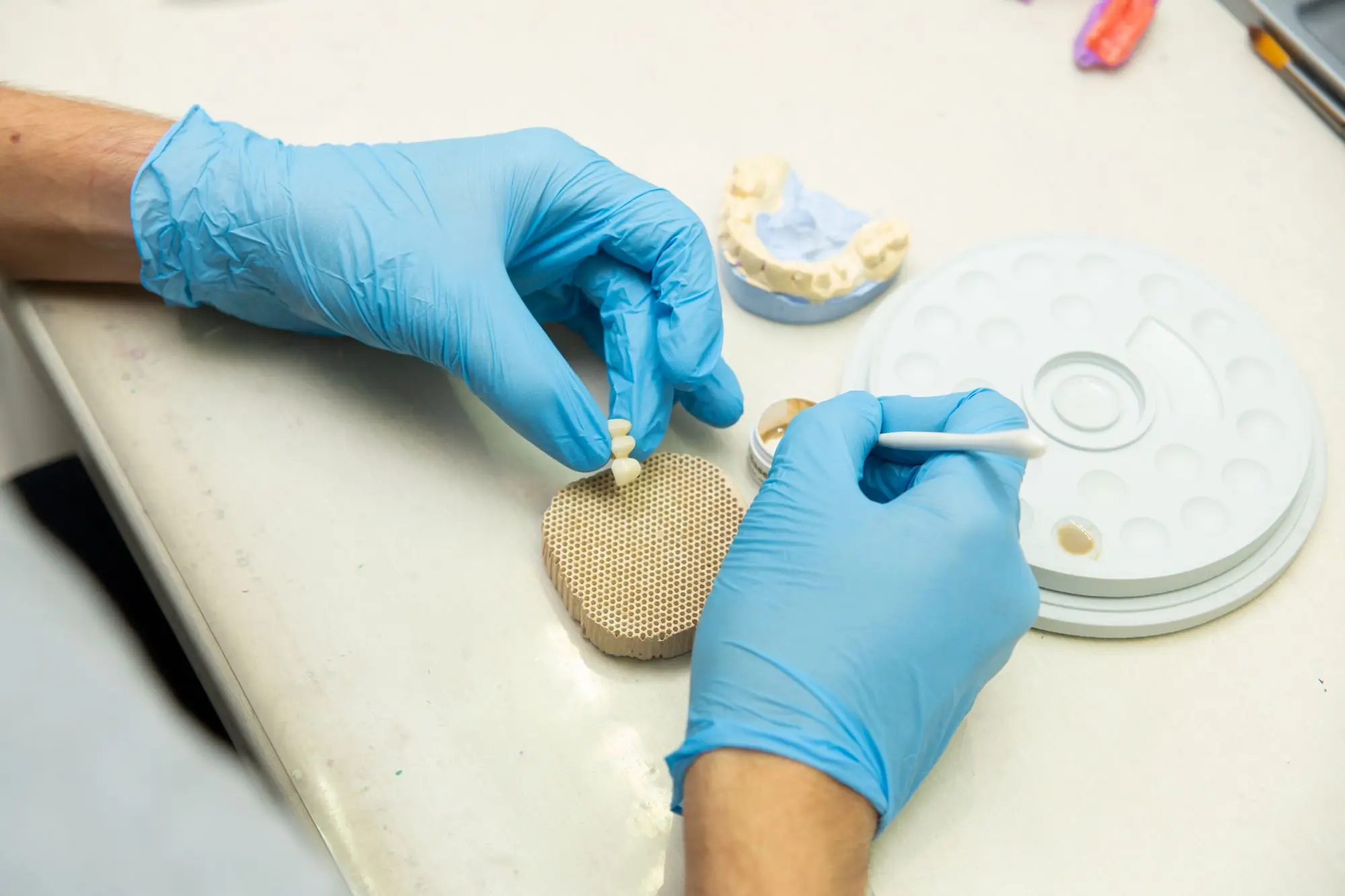
A crown that is milled and polished looks uniform. Our ceramist adds colour and translucency by hand, so it matches the teeth next to it in daylight, not only under clinic lights.
How is the shade chosen?
At the try-in, with you, in daylight. Small changes are made the same day before the crown is fixed.
When is a crown the right choice?
When a tooth needs more protection than a filling or veneer can give. Common reasons are a tooth that has had root canal treatment, a large old filling that leaves thin walls, a cracked or broken tooth, or a tooth that is badly worn. A crown is also the visible tooth on top of an implant.
If the tooth is still largely intact, a smaller restoration such as an onlay or a veneer may keep more of it. The doctor explains the options after examining the tooth and its X-ray.
Which materials do you use?
Tooth-coloured ceramics without metal. e.max, a glass ceramic, is usually chosen for front teeth because it lets light through like enamel. Zirconia is stronger and usually chosen for back teeth, bridges and people who grind. Zirconia can be layered with porcelain on the visible side for a more natural look. Our guide on e.max or zirconia explains the difference.
How is a tooth prepared for a crown?
Under local anaesthetic, the outer layer of the tooth is shaped all around so the crown can sit over it at a natural thickness. A digital scan replaces impression putty. You leave the same day with a temporary crown, and the final crown is fitted after the try-in.
More of the tooth is shaped for a crown than for a veneer. That is why we recommend a crown only when the tooth needs the protection.
What are the possible risks and side effects?
Most people have little discomfort beyond some sensitivity for a few days. Possible issues include:
- Sensitivity to hot and cold after preparation, usually settling within days or weeks
- In a tooth with a living nerve, the nerve may become inflamed, sometimes years later, and need root canal treatment
- A chip in the ceramic, more likely with grinding
- A crown coming loose, which can usually be cemented again
- Decay at the edge of the crown if cleaning there is poor
Your doctor checks the tooth, its nerve and your bite before preparing it, and tells you which of these apply to you.
What affects the price of a crown?
The material, whether the crown is layered by hand or milled, and any treatment needed first, such as root canal treatment, a core build-up or replacing an old filling. A crown on an implant is priced together with the implant. Your written quote lists each tooth and item; starting prices are on the prices page.
How long do crowns last?
With good care, ceramic crowns commonly last ten years or more, and zirconia crowns often longer. Grinding, gum health and cleaning at the edge of the crown make the biggest difference. Our guide on caring for veneers and crowns explains the daily routine.
Crown or veneer?
A veneer covers the front of the tooth only and keeps more of your natural tooth. A crown covers the whole tooth and is the better choice when a tooth is weakened. In a full smile, both are often used side by side and matched in shade by the same ceramist. See our veneers page.
Who works on your crowns?
One doctor examines the tooth, prepares it and fits the crown. Our ceramist makes the crown by hand in the lab next door and checks the shade with you in daylight at the try-in, so it matches the teeth next to it.
How many visits does a crown need?
Usually three over five nights. On the first visit the doctor examines the tooth, takes an X-ray and scans your teeth. On the second, the tooth is prepared and a temporary crown is fitted. On the third, you try in the final crown, the ceramist adjusts it if needed, and it is fixed.
If a tooth needs root canal treatment first, or several crowns are made together with veneers, the plan may need an extra visit or night. Your written plan shows every appointment before you book flights, and our guide on how long to stay shows typical stays.